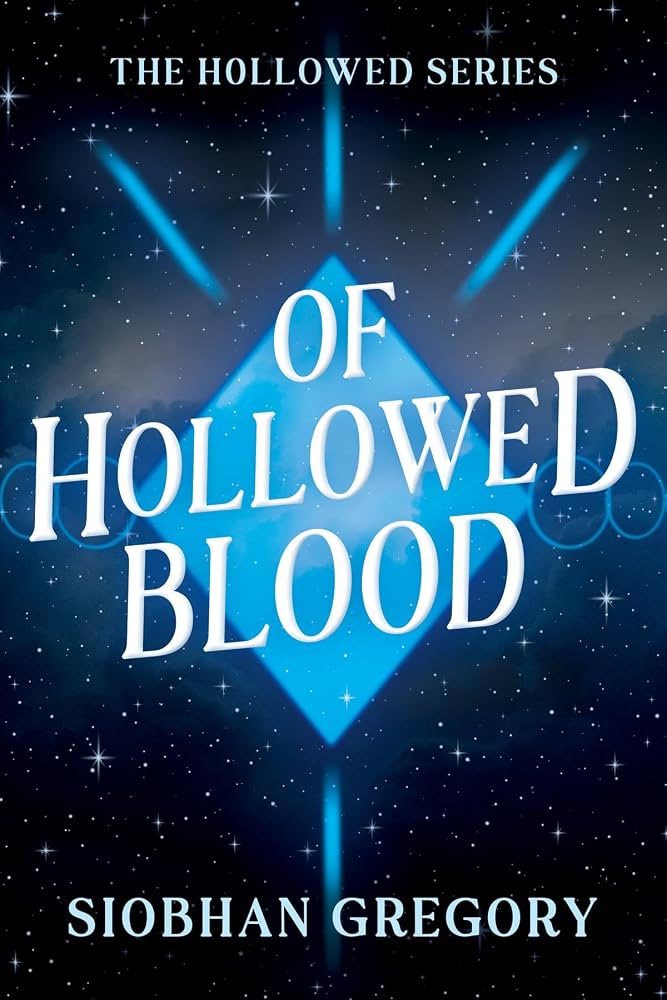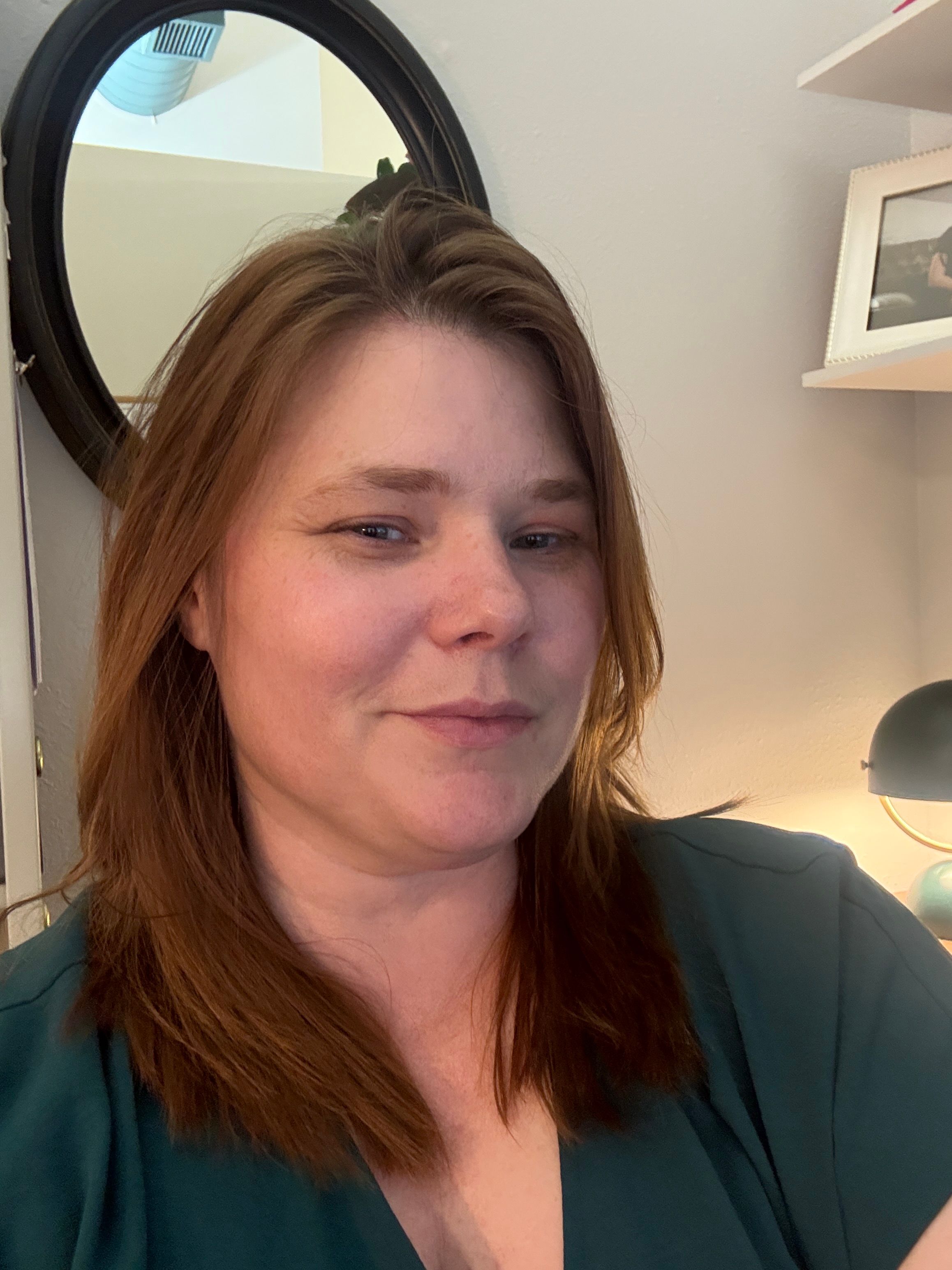
Siobhan Gregory writes dark fantasy and romantasy in Springfield, Missouri. Her debut, Of Hollowed Blood, is the first book in The Hollowed Series. Here, she talks about the family story behind the novel, her carefully planned writing process, and her work in literacy advocacy.
Did you always imagine yourself doing this, or did you arrive here by accident?
The morbid part of this story is that I started writing by accident. I lost my mom to brain cancer in December of 2024. For the 18 months leading up to her passing, I had a difficult time sleeping. I feared that if I slept, I would miss a phone call, a text message, or another alert that something terrible had happened.
To keep myself semi-alert, I would dream of far-off make-believe places. I would write them down in a notebook that I kept at my bedside, or record a voice memo so I wouldn't lose the story.
I would later share these stories with my mom as a way to do memory exercises with her. I would tell her my stories, ask her opinion, and ask what she would do. The further her condition progressed, the less I got from her, the more I got from her. The less she could participate in my story creation, the more I found myself creating wilder and wilder stories to spur her mind.
Those wild stories led to Of Hollowed Blood, which I published in honor of my mom, Brenda Ellis.
What does your creative process actually look like?
I am wholly Type A. In both my life and my writing. I never knew the term “pantser” until I went to a critique group. When I heard that term and what it meant, I was floored! I wish I were a pantser. Alas, my brain does not work that way. I must first create the world my characters will live in. Then I create my characters. From there, I outline, chapter by chapter, what will happen. Sometimes we take a detour, but most of the time we stay relatively on the same path.
“Those wild stories led to Of Hollowed Blood, which I published in honor of my mom, Brenda Ellis.”
Siobhan Gregory
What’s something you had to unlearn to move forward?
I’m a writer who thrives on short, punchy sentences, and many of my critique group friends feel the same. With the help of my fantastic editor, I’ve been honing my skills to create longer, more flowing sentences. I’ve had to learn not only to expand my sentences, but also to enjoy the pageantry of crafting beautifully constructed sentences and paragraphs.
What does being part of a literary community mean to you?
Literacy drives the world forward. Books that resonate with people can drive change. Missouri ranks 27th among the 50 states in adult literacy. Where I live, in Greene County, 33% of adults have literacy skills below Level 2, making it hard for them to do tasks like reading prescription labels or managing household budgets.
A recent Atlantic article, “The End of Reading Is Here,” discusses America entering a “postliterate” era. Even among those without reading difficulties, the number of people who read for pleasure daily has decreased from 28% in 2004 to only 16% now. Harvard’s Martin West and an analysis in Language Magazine both observe the same trend: literacy skills improved for years but have been steadily declining since around the mid-2010s.
Being a part of a community that strives to make the world better means that any change for good can and will be compounded years after I’m gone.
What book has stayed with you far longer than you expected?
The Historian by Elizabeth Kostova
I read it for a book club, and I still think about it to this day.
What are you saying yes to more often these days?
Anything that gives me the opportunity to write more. A canceled plan? That’s totally okay. I will take the time to write. A coffee shop meeting? Can I bring my laptop?
“Anything that gives me the opportunity to write more.”
Siobhan Gregory
What do you think the publishing or literary industry needs to do better?
Gatekeeping publishing routes and how to do it. Big publishing companies already have all the money to do whatever they want. If little old me wants to publish my teeny tiny book, don’t be scared of me. Let me do it. Who knows, I might surprise you. Competition makes us better.
What has creating taught you about yourself?
That I am capable of more than I thought I was. And not just a little more. Way more.